



- Home
- About Us
- Products
- Trauma Internal Fixation System
- Spinal Internal Fixation System
- External Fixation
- Artificial Implants System
- Sports Medicine
- Power tools
- VSD System
- Instruments
- Medical supplies
- Blog
- Personnel Profile
- Contact Us
Manager’s Mobile
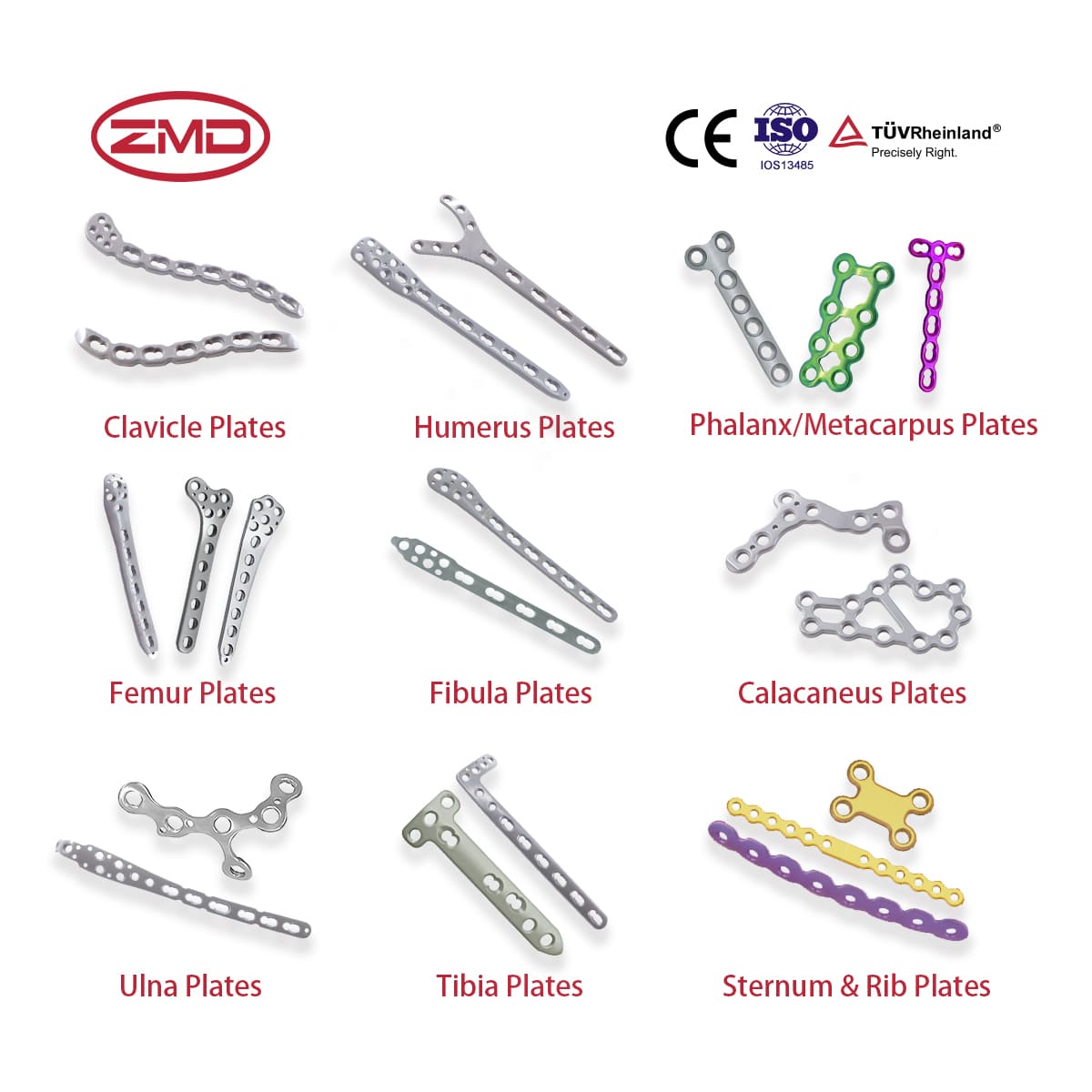
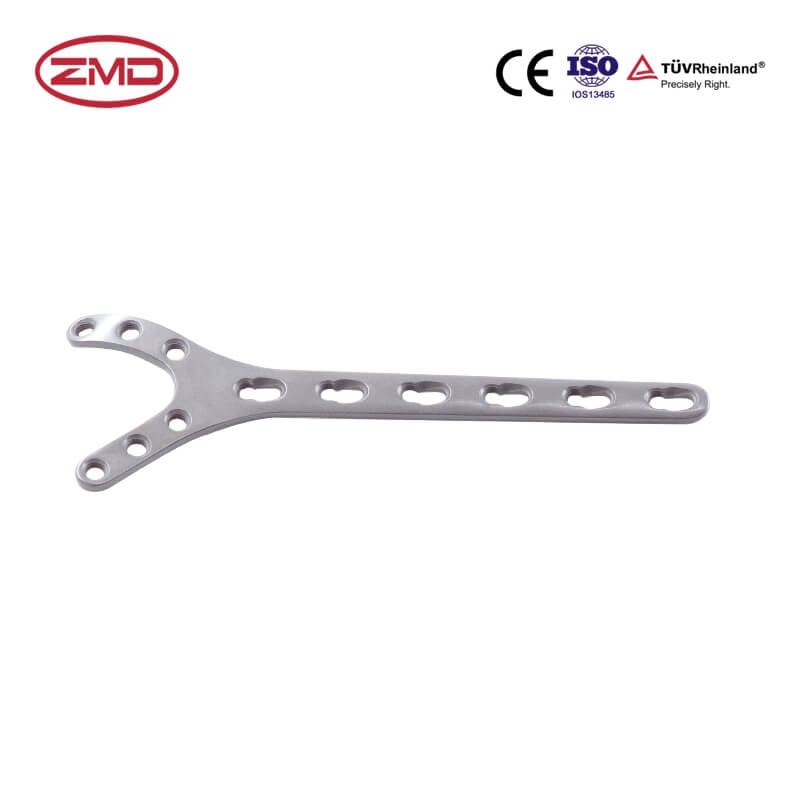
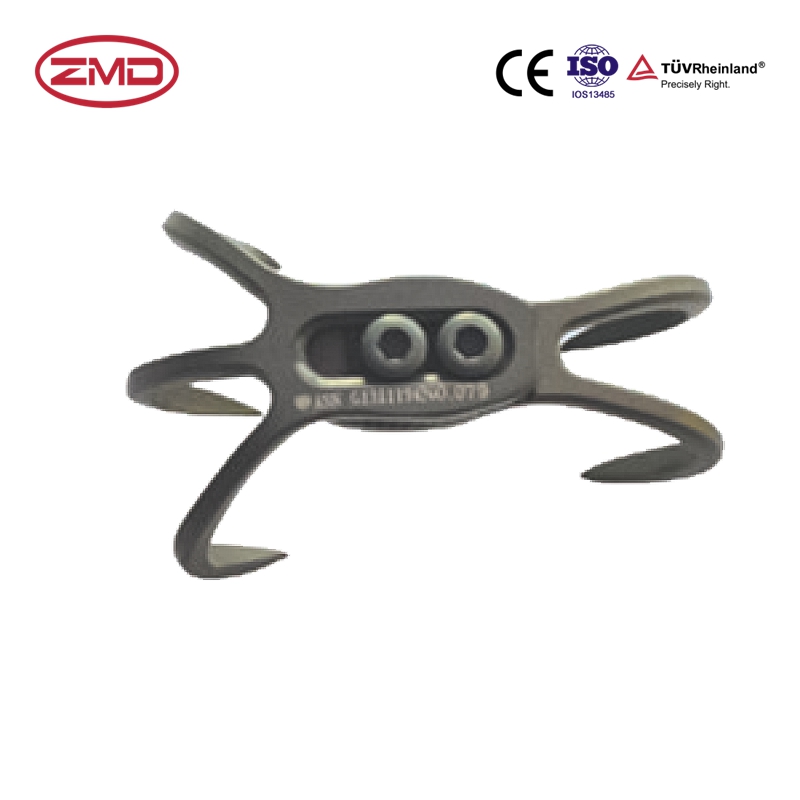
1.Anatomically Contoured Design: Precisely engineered to match the complex contours of the distal humerus, the plate ensures optimal fit and stability. The low profile design minimizes soft tissue irritation.
2.Versatile Fixation: The plate incorporates both locking and non-locking screw holes, providing flexibility for various fracture patterns. The combination of screw types enhances fixation strength.
3.Enhanced Bone Healing: The plate’s surface treatment promotes bone ingrowth, accelerating healing and reducing the risk of implant failure. The plate’s design minimizes stress shielding.
4.Modular System: Compatible with a range of complementary implants, the plate offers a comprehensive solution for complex humeral fractures. The modular design allows for customization.
5.Proven Clinical Performance: Supported by clinical studies demonstrating excellent outcomes, the plate delivers reliable and predictable results. The plate’s design is based on extensive research and development.
| Code | Product name | Size | Related Screws |
| 4211.1603 | Humeral Distal Y-shaped Combinated Locking Plate | 3 Holes Left | 3.5mm |
| 4211.1604 | Humeral Distal Y-shaped Combinated Locking Plate | 4 Holes Left | 3.5mm |
| 4211.1606 | Humeral Distal Y-shaped Combinated Locking Plate | 6 Holes Left | 3.5mm |
| 4211.1608 | Humeral Distal Y-shaped Combinated Locking Plate | 8 Holes Left | 3.5mm |
| 4212.1603 | Humeral Distal Y-shaped Combinated Locking Plate | 3 Holes Right | 3.5mm |
| 4212.1604 | Humeral Distal Y-shaped Combinated Locking Plate | 4 Holes Right | 3.5mm |
| 4212.1606 | Humeral Distal Y-shaped Combinated Locking Plate | 6 Holes Right | 3.5mm |
| 4212.1608 | Humeral Distal Y-shaped Combinated Locking Plate | 8 Holes Right | 3.5mm |
Key Features and Benefits of the Humeral Distal Medial Combinated Locking Plate
Our Humeral Distal Medial Combinated Locking Plate is designed to provide optimal stability and support for complex distal humerus fractures. Featuring a precise anatomical contour, the plate seamlessly integrates with the bone’s natural structure, minimizing soft tissue irritation. The combination of locking and non-locking screw options offers unparalleled versatility for addressing various fracture patterns.
Constructed from high-grade [material, e.g., titanium or stainless steel], the plate exhibits exceptional strength and biocompatibility. Its porous surface promotes bone ingrowth, accelerating healing and reducing the risk of implant failure. The plate’s modular design allows for customization to individual patient needs, ensuring a personalized treatment approach. With its combination of advanced features and proven clinical performance, our Humeral Distal Medial Combinated Locking Plate is the ideal solution for achieving superior patient outcomes.
Indications for the Humeral Distal Medial Combinated Locking Plate
The Humeral Distal Medial Combinated Locking Plate is indicated for the treatment of complex fractures involving the distal humerus. This innovative implant is designed to address a wide range of fracture patterns, including:
How Does a Humeral Distal Medial Combinated Locking Plate Work?
The Humeral Distal Medial Combinated Locking Plate is designed to restore stability and function to the complex anatomy of the distal humerus. The plate is anatomically contoured to match the bone’s natural shape, ensuring optimal fit and minimal soft tissue disruption.
During surgery, the plate is secured to the bone using a combination of locking and non-locking screws. The locking screws provide rigid fixation, preventing implant migration and maintaining bone fragment alignment. The non-locking screws offer flexibility in accommodating various fracture patterns.
The plate’s design promotes bone healing by distributing stress evenly and encouraging bone ingrowth. Over time, the bone integrates with the plate, creating a stable and durable union. The result is restored function and improved range of motion for the patient.
FAQ
Q1: What is a Humeral Distal Medial Combinated Locking Plate?
A: A Humeral Distal Medial Combinated Locking Plate is an orthopedic implant designed to stabilize fractures of the distal humerus. It combines locking and non-locking screw options for versatile fixation.
Q2: What types of fractures is this plate used for?
A: The plate is indicated for a wide range of distal humerus fractures, including comminuted, osteoporotic, and open fractures. It can also be used for nonunions and malunions.
Q3: What are the benefits of using a combined locking and non-locking plate?
A: The combination of locking and non-locking screws provides flexibility in addressing various fracture patterns, ensuring optimal stability and bone healing.
Q4: How does the locking mechanism work?
A: The locking mechanism prevents screw back-out, ensuring secure fixation and preventing implant failure. This enhances stability and promotes bone healing.
Q5: What is the importance of the plate’s anatomical design?
A: The anatomical contour of the plate matches the natural shape of the distal humerus, minimizing soft tissue irritation and ensuring optimal implant fit.
Q6: How does the plate promote bone healing?
A: The plate’s design encourages bone ingrowth through features like porous surfaces or specific coatings, accelerating healing and reducing the risk of complications.
Q7: Is the plate suitable for minimally invasive surgery?
A: Many plate designs are low profile, allowing for minimally invasive surgical approaches, which can reduce trauma to surrounding tissues.
Q8: What materials are typically used for the plate?
A: Common materials include titanium and stainless steel, chosen for their biocompatibility, strength, and corrosion resistance.
Q9: How long is the recovery process after surgery using this plate?
A: Recovery time varies depending on the severity of the fracture and individual patient factors. The plate’s ability to promote healing can contribute to faster recovery.
Q10: Can the plate be removed after the bone has healed?
A: In most cases, the plate is designed to remain in place permanently. However, removal may be considered in specific circumstances, such as if complications arise or if the plate is no longer needed.




Oh yeah! I have to mention their payment options and discount offers, which are awesome! Those payment methods are as flexible as moving water and can be chosen freely according to our cash flow situation. And the frequent discounts, like a timely rain, have been moisturizing our financial statements time and again, and have had a rocket-like positive impact on our profits! With ZMD, I feel relaxed and at ease when it comes to purchasing!
Send us a message if you have any questions or request a quote. Our experts will give you a reply within 24 hours and help you select the right valve you want.
Book Now
If you are looking for professional orthopedic medical product solutions, don’t hesitate to contact us now!

🏆 ZMD Medical Your One‑Stop Orthopedic Solution Partner
🏭 Established in 1993 | 20000 m² Factory 📜 CE / ISO / CFDA 📱 +86‑18651128828 🌐 zmdorthopedics.com 🔗 meditch.cn
Copyright © 2024 ASK Project